One missed detail can turn your dream international trip into an expensive headache.
For first-time international travelers, the challenge isn’t just booking flights and hotels-it’s knowing what must be handled before you ever reach the airport.
A smart travel planning checklist helps you avoid passport surprises, visa delays, money problems, packing mistakes, and last-minute stress.
This guide walks you through the essential steps to prepare confidently, travel smoothly, and enjoy your first trip abroad without feeling overwhelmed.
International Travel Planning Basics: Passports, Visas, Entry Rules, and Trip Timelines
Start with your passport because everything else depends on it. Many countries require your passport to be valid for at least six months after your arrival date, and some airlines may deny boarding if you do not meet that rule. If your passport is close to expiring, compare standard processing with expedited passport renewal services before booking non-refundable flights.
Next, check whether you need a tourist visa, eVisa, visa on arrival, or travel authorization. Use official embassy websites first, then cross-check requirements with tools like IATA Travel Centre or Sherpa, especially if you have a layover in another country. A real-world example: flying from the U.S. to Bali through Australia may trigger different transit rules than flying through Singapore.
- Confirm passport validity, blank visa pages, and name spelling on all bookings.
- Check visa fees, processing time, photo requirements, and permitted length of stay.
- Review entry rules for proof of onward travel, hotel booking, vaccines, and travel insurance.
Build your trip timeline backward from your departure date. Apply for visas early, but not so early that the validity period expires before your trip begins. I’ve seen travelers lose money on cheap airfare because they waited until the final week to check entry requirements.
Keep digital and printed copies of your passport, visa approval, travel insurance policy, flight itinerary, and emergency contacts. Store one set in your carry-on and another in secure cloud storage like Google Drive. It is a small step, but it can save hours if your phone dies, your bag is delayed, or an immigration officer asks for proof on arrival.
How to Build a First-Time International Travel Checklist for Flights, Hotels, Money, Health, and Packing
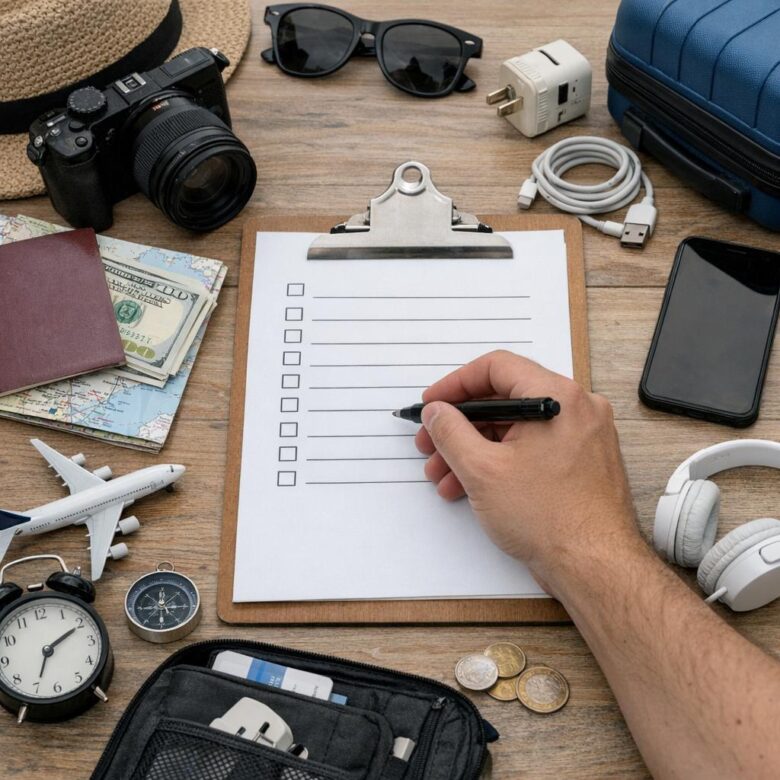
Start your international travel checklist by grouping tasks around the five areas that can create the most expensive problems: flights, hotels, money, health, and packing. I usually build mine in Google Sheets because it is easy to update from a phone and share with a travel partner.
For flights, record your airline booking reference, baggage allowance, seat selection, airport transfer plan, and online check-in time. A real-world example: if your flight lands in Tokyo at 10:30 p.m., your checklist should confirm whether trains are still running or whether you need a prepaid airport taxi or hotel shuttle.
- Hotels: Save the address in English and the local language, check-in hours, deposit policy, cancellation terms, and nearby transport options.
- Money: List your travel credit card, debit card, ATM withdrawal fees, foreign transaction fees, emergency cash, and digital wallet backup.
- Health: Add travel insurance details, prescription medicines, vaccination requirements, allergy notes, and the nearest hospital or clinic to your hotel.
Your packing section should be practical, not just a clothing list. Include a universal travel adapter, portable power bank, copies of your passport, eSIM details, weather-appropriate outfits, and any airline liquid restrictions for carry-on luggage.
A useful trick is to add a “before leaving home” column with final checks: passport validity, visa approval, roaming or eSIM activation, bank travel notice, and travel insurance certificate. This keeps the checklist focused on preventing real travel disruptions, not just making you feel organized.
Common First International Trip Mistakes to Avoid Before Departure
One of the biggest first international trip mistakes is booking flights and hotels before checking passport validity, visa requirements, and entry rules. Some countries require your passport to be valid for at least six months beyond your travel dates, and a cheap airfare can become expensive fast if you need urgent passport renewal or a last-minute visa service.
Another common mistake is relying only on a regular debit card abroad. Before departure, compare travel credit cards with no foreign transaction fees, notify your bank, and carry a backup payment method in a separate bag. I’ve seen travelers land in Europe with a blocked card and no local cash for the airport train-not a fun start.
- Buy travel insurance with medical coverage, trip cancellation benefits, and emergency assistance, not just the cheapest policy.
- Download offline maps, hotel confirmations, and boarding passes using Google Maps or your airline app.
- Set up an international eSIM or roaming plan before you leave, especially if you need ride-hailing, translation, or mobile banking on arrival.
Do not ignore arrival logistics. If your flight lands late at night, pre-book an airport transfer or confirm public transportation hours, because taxis, surge pricing, and unfamiliar neighborhoods can add stress and unnecessary cost.
Finally, avoid packing like you are moving abroad. Check airline baggage allowance, voltage adapters, prescription medication rules, and weather by city-not just by country. A compact carry-on, a universal travel adapter, and digital document backups can save money, time, and a lot of frustration before your trip even begins.
Wrapping Up: Best Travel Planning Checklist for First-Time International Travelers Insights
International travel feels far less overwhelming when each decision is made before pressure sets in. The best checklist is not the longest one-it is the one that helps you leave with confidence, flexibility, and fewer avoidable surprises. Focus first on essentials like documents, money access, health requirements, and communication, then refine the details based on your destination and travel style.
Before you go, ask one practical question: “If something changes, am I prepared to handle it?” If the answer is yes, you are ready to travel smarter, stay calmer, and enjoy your first international trip with greater peace of mind.