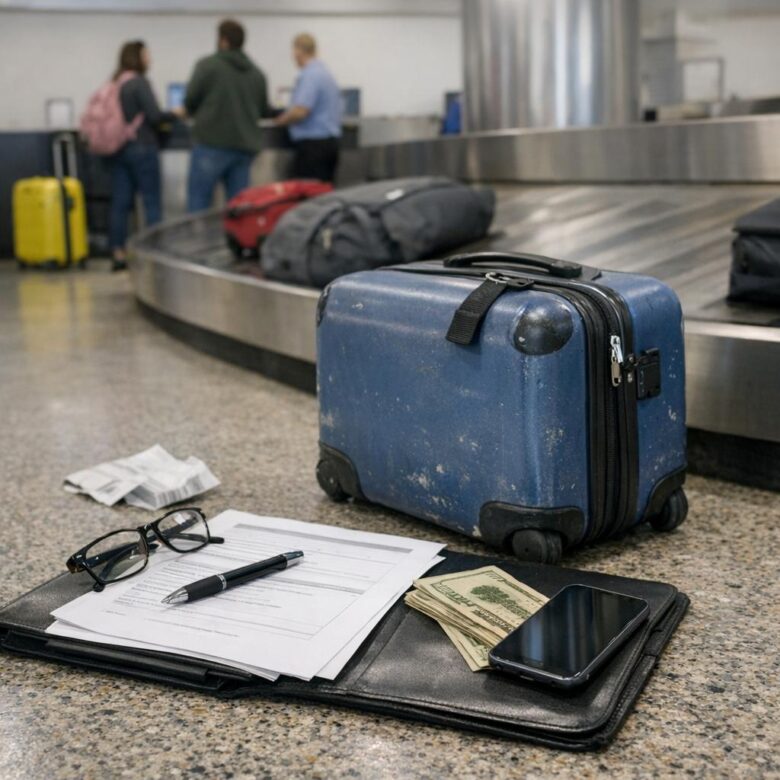
What would you do if your suitcase landed in a different country than you did?
Lost luggage insurance can help cover the cost of essential items, delayed bags, or baggage that never arrives-but the details matter more than most travelers realize.
Airlines, credit cards, and travel insurance policies often overlap, yet each comes with different limits, deadlines, exclusions, and proof requirements.
This guide explains how lost luggage insurance works, what it typically covers, and what to check before you rely on it for your next trip.
What Lost Luggage Insurance Covers-and When It Actually Pays Out
Lost luggage insurance usually covers the cost to replace personal items when your checked bag is permanently lost, stolen, or damaged during a covered trip. Depending on the travel insurance policy, this may include clothing, shoes, toiletries, luggage itself, and sometimes electronics, although high-value devices often have lower limits or require extra coverage.
The payout is not automatic. Most insurers expect you to file an airline claim first, get a Property Irregularity Report, and wait until the airline officially classifies the bag as lost rather than delayed.
- Baggage delay coverage: reimburses essentials like clothes and toiletries while you wait.
- Lost baggage reimbursement: pays for covered items after the bag is declared lost.
- Damaged luggage coverage: may help repair or replace a suitcase damaged in transit.
For example, if your suitcase disappears on a flight to London and you buy a jacket, chargers, and basic toiletries, baggage delay benefits may cover those purchases if you keep receipts. If the airline later confirms the bag is lost, your insurer may reimburse the remaining covered value, minus exclusions, depreciation, policy limits, or any airline compensation already paid.
A practical tip: track expensive bags with Apple AirTag or a similar luggage tracker, but do not rely on tracking alone for a claim. Insurers still want documentation, including boarding passes, baggage tags, receipts, photos, and proof that you reported the issue promptly through the airline or systems like WorldTracer.
How to File a Lost Luggage Insurance Claim Step by Step
Start at the airport before you leave the baggage area. Go to the airline’s baggage service desk and request a Property Irregularity Report (PIR) or written baggage claim reference number; most travel insurance companies will ask for this before reviewing a lost luggage insurance claim.
Next, notify your insurer as soon as possible through its claims portal, app, or customer support line. If your coverage comes from a premium credit card, check the benefits center for your card issuer, such as Chase Travel or American Express, because credit card travel insurance often has strict filing deadlines.
- Upload the airline report, boarding pass, baggage tag, and travel itinerary.
- Provide receipts or estimated values for lost items, especially electronics, clothing, and business gear.
- Keep receipts for emergency purchases if you are also claiming baggage delay reimbursement.
A real-world example: if your checked bag with work clothes and a laptop charger disappears on a business trip, buy only reasonable essentials and keep itemized receipts. Insurers usually question expensive replacement purchases if they do not match the length or purpose of the trip.
Be specific when listing your belongings. Instead of writing “clothes and accessories,” list “two dress shirts, running shoes, toiletry kit, phone charger,” with approximate purchase dates and costs where possible.
Finally, track the airline’s baggage search status and send updates to the insurer if the bag is declared officially lost. In my experience, claims move faster when documents are labeled clearly, saved as PDFs, and submitted in one complete batch rather than scattered emails.
Policy Limits, Exclusions, and Documentation Travelers Should Check Before Buying
Before buying lost luggage insurance, check the benefit limit and the per-item cap, not just the headline coverage amount. A policy may advertise $2,000 in baggage coverage but limit jewelry, cameras, laptops, or designer bags to a much lower amount unless you buy a premium travel insurance plan or scheduled item coverage.
Pay close attention to exclusions. Many travel insurance policies will not fully cover cash, passports, business documents, fragile items, medical devices, or unattended bags left in a rental car or hotel lobby. For example, if your checked suitcase contains a $1,500 camera lens and the policy has a $500 electronics limit, that is likely the most you can recover.
- Check whether coverage is for lost, stolen, delayed, or damaged baggage.
- Confirm if reimbursement is based on actual cash value or replacement cost.
- Review claim deadlines and required proof before your trip.
Documentation matters as much as the policy itself. Keep airline baggage tags, purchase receipts, photos of packed valuables, and a written report from the airline or airport baggage desk. Tools like AirTags or Tile trackers can help locate a missing bag, but insurers usually still require official documentation before approving a claim.
Also compare coverage from your credit card travel protection, airline liability rules, and standalone travel insurance quotes on platforms like Squaremouth. In real claims, overlapping coverage can reduce out-of-pocket cost, but only if you understand which policy pays first.
The Bottom Line on Lost Luggage Insurance: How It Works and What Travelers Should Check
Lost luggage insurance is most valuable when it matches the way you travel. A short domestic trip with inexpensive belongings may only need basic airline compensation, while international travel, tight connections, or checked bags with higher-value items may justify stronger coverage. Before buying, compare benefit limits, exclusions, claim deadlines, and documentation rules-not just the headline price. The best policy is one that pays realistically, is easy to claim against, and fills the gaps left by airlines or credit cards. Choose coverage based on your actual risk, not fear or assumptions.